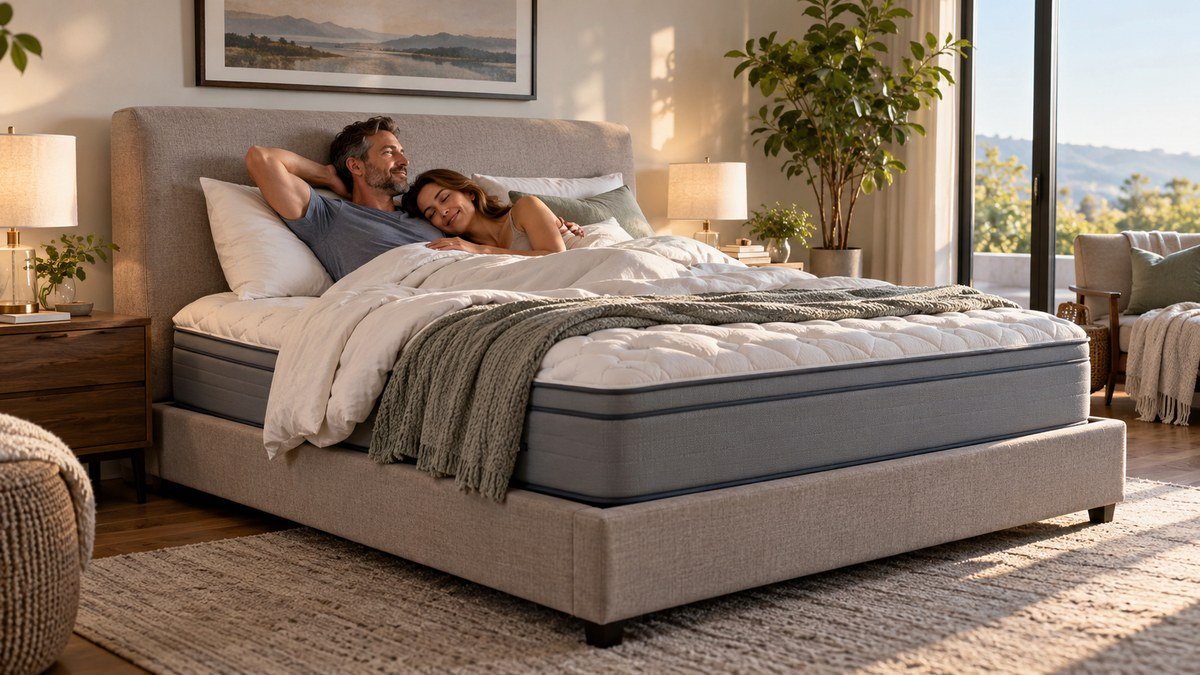
Airpedic Mattress Long-Term Review: My Real Experience with Multi-Zone Air Sleep
For roughly five years, my morning routine looked ridiculous. I would roll onto my side, swing my legs off the frame, sit up with my hands pressed against my lower back, and wait about sixty seconds for my spine to stop complaining before standing up. If you deal with persistent back tightness or morning stiffness, you know that quiet, dread-filled routine all too well.
I went through the usual progression that frustrated sleepers endure. First came a heavy-duty inner-spring that felt like a slab of concrete after midnight. Next was an all-foam bed-in-a-box that felt heavenly for twenty minutes, but by 3:00 AM, my hips had sunken so deep into the material that my lumbar region was left hanging in mid-air with zero support. Then I tried a traditional adjustable number bed from the brand everyone sees on television commercials, only to discover that adjusting the firmness just turned the whole middle into a sagging hammock or a rigid balloon.
That frustrating search eventually brought me to Airpedic. Unlike mainstream air beds that run on a single air chamber per side, Airpedic specializes in a patented multi-zone adjustable bladder system designed specifically to tackle lumbar sag. I decided to pull the trigger on an Airpedic 600 series after talking to their customer team, and after more than eight months of sleeping on it night after night, here is the complete breakdown of how this bed performs in real life.
If you want to look at the exact builds and technical specifications while reading this, you can check them out here: Visit Official Airpedic Website Now.
What Actually Makes Airpedic Different From Ordinary Airbeds?
Most people hear the word “air mattress” and picture a noisy vinyl pool float or a temporary camping pad that deflates by sunrise. High-end adjustable airbeds are completely different animals, but even among high-end models, Airpedic does things differently.
The core problem with standard single-chamber air beds is simple physics: displacement. When you lie down on a sealed chamber of air, your heaviest section—your hips and pelvic region—pushes down the hardest. That air has to go somewhere, so it displaces toward the head and feet. The result? Your hips sink too low, your lower back arches awkwardly, and you wake up with a tight, aching lumbar curve.
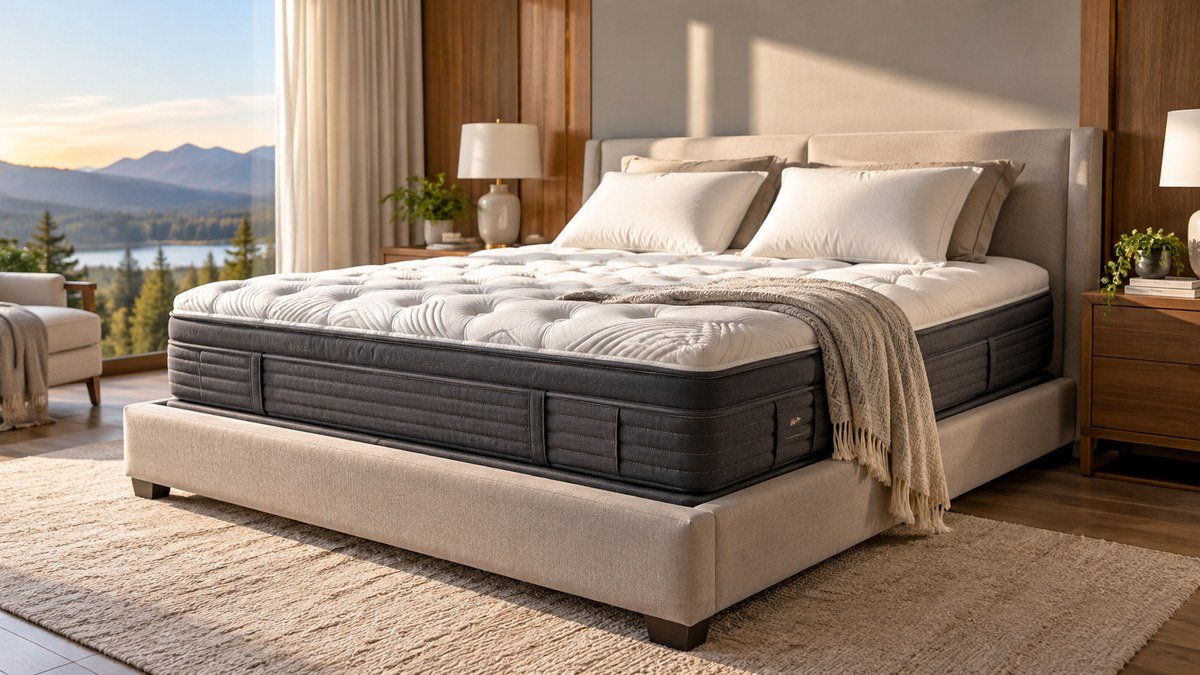
Airpedic solves this by engineering three separate air zones on each side of the bed:
- Zone 1 (Shoulders and Upper Body): Allows your shoulders to sink in gently without pushing excess pressure back into your neck.
- Zone 2 (The Dedicated Lumbar Zone): A standalone chamber placed right beneath your lower back that you can pump up or soften independently of your hips.
- Zone 3 (Hips and Legs): Keeps your pelvis steady and level without stealing air from your midsection.
On top of the multi-chamber design, they do something rarely seen with memory foam and latex comfort layers: they build in a genuine airflow transfer system. Instead of trapping your body heat against closed-cell foam, thousands of tiny vertical perforations run down through the layers into horizontal cross-channels, allowing air to circulate freely beneath you with every natural movement you make.
Delivery, Setup, and Initial Impressions
The bed arrived in multiple heavy-duty boxes via freight delivery. Because Airpedic builds modular mattresses using commercial-grade components, it does not come rolled up like a tightly vacuumed burrito that you throw on a frame and hope expands evenly.
Putting it together took my partner and me about forty-five minutes. You lay out the zippered perimeter casing, arrange the high-density foam side rails, slide the multi-zone urethane air chambers into position, attach the color-coded hoses to the dual remote pump unit, and layer the comfort foams inside before zipping the top cover shut.
The build quality stood out immediately. The perimeter foam rails are dense, firm, and interlock cleanly. Cheaper air beds often suffer from “roll-off,” meaning if you sit or sleep near the edge of the mattress, the sides collapse. The Airpedic rails are robust enough that you can sit right on the edge to tie your shoes without feeling like you are sliding off the side.
The pump itself was surprisingly quiet. It tucks completely under the frame, and when it makes adjustments, it sounds like a soft, low hum rather than a miniature vacuum cleaner. Once our hoses were clicked in, we ran each zone up to full pressure to seat the components, and then began tinkering with individual settings.
Dialing In the Feel: How the Three-Zone System Works
The first few nights required a bit of learning curve, which is normal when you suddenly have control over three separate parts of your spine. With a regular bed, you get whatever firmness the factory picked. With Airpedic, each side of the bed gets its own digital handheld remote with separate readouts for the upper body, lumbar region, and lower body.
I sleep primarily on my side, rolling onto my back for maybe an hour or two in the early morning. My partner is a dedicated stomach-and-side hybrid sleeper. On an ordinary mattress, finding common ground was an endless compromise where neither of us felt rested.
Here is how the zones altered my personal sleep posture:
1. Side Sleeping Comfort
On my side, broad shoulders usually create pressure points that can leave arms feeling numb or tingly. I dropped my upper body zone down to a softer pressure. Then, I dialed the lumbar zone up slightly. That subtle extra support filled the empty gap between my waist and the mattress, keeping my spine straight as a laser instead of letting my torso twist downward.
2. Eliminating Back Hammocking
When rolling onto my back, having that dedicated middle chamber is night and day compared to standard beds. If you feel your hips sinking slightly, you don’t have to crank up the whole mattress into an unforgiving brick. You simply add a touch of pressure to the lumbar chamber, which immediately lifts your sacrum and stabilizes your lower back.
For more technical details on how the zone pressures balance individual body weights, take a look at the official breakdown: Visit Official Airpedic Website Now.
Temperature Control and the Airflow Transfer System
One of my biggest fears with any bed featuring memory foam or polyurethane layers is heat retention. I run hot at night. On our old foam bed, I used to wake up at 2:00 AM kicking sheets off because the foam absorbed body heat and reflected it right back like an electric blanket.
Airpedic uses a patented Airflow Transfer System that pairs specialized foam with a breathable cover fabric called Kool-Flow. The foam has small vertical holes punched all the way through the surface layers. These holes meet side-to-side air channels cut into the base foam.
When you toss, shift, or take a deep breath, your weight shifts, pumping room-temperature air through the channels and venting hot, humid air out through the sidewalls. The difference is genuinely noticeable. You never get that clammy, sticky feeling under your back or shoulders, even during humid summer stretches without blasting the air conditioner.
What Other Real Sleepers Say
While my experience has been centered on easing morning stiffness, I spent months browsing user feedback across specialty mattress forums and communities before spending the money. Here are three comments from verified owners that matched my experience closely:
“I had spinal fusion surgery six years ago and spent thousands on fancy latex and hybrid beds that ended up hurting within six months. The Airpedic 800 is the first bed where I can actually adjust the lumbar bladder independently when my nerve pain acts up. It took about a week to find my target numbers, but I finally wake up without that burning sensation in my lower spine.”
— Marcus T., Colorado
“My husband weighs 245 lbs and likes a rock-solid bed, while I weigh 128 lbs and need something plush for my shoulders and hips. Every dual-sided bed we tried created a weird trench right down the center where we couldn’t cuddle without falling into a hole. Airpedic solved that completely. The seam between our sides is barely noticeable, and we both get the exact support we need.”
— Sarah K., North Carolina
“We owned a Sleep Number for almost ten years and got sick of the sagging in the middle. Swapping to Airpedic showed us what actual ergonomic support feels like. The multi-zone bladder keeps your hips from dropping below your torso, which was my single biggest complaint with our old air system. Plus, their customer service actually picks up the phone without an automated bot circus.”
— David L., Ohio
Airpedic vs. The Big Name Competitors
When people think of adjustable air beds, Sleep Number is usually the first name that pops to mind. It makes sense—they spend a fortune on marketing, mall storefronts, and celebrity sponsorships. But when you compare the engineering under the hood, the differences become clear.
| Feature | Airpedic | Typical Competitor Airbeds |
|---|---|---|
| Support Zones | 3 independent zones per side (Shoulder, Lumbar, Hip/Leg) | Single chamber per side (Uniform pressure) |
| Mid-Body Sag Prevention | Dedicated lumbar chamber supports lower spine | Hips sink, displacing air to head and feet |
| Cooling Technology | Patented vertical & horizontal Airflow Transfer System | Standard cooling gel or phase-change cover fabrics |
| Center Trenching | High-density internal division prevents center roll-in | Common “hammocking” or trench between dual chambers |
| Modularity & Repairs | Fully accessible, field-replaceable components | Often proprietary, glued builds requiring full swaps |
The single biggest reason I picked Airpedic over the competition comes down to that center trench issue. With many dual airbeds, when both sides are set to different firmness levels, the middle divider feels like an awkward ridge, or worse, the sides slope inward, sucking you into a trench. Airpedic builds their internal foam borders with dense, square-cut architectural walls. The transition across the center feels continuous, smooth, and stable.

Durability, Maintenance, and Real-World Upkeep
One of the quiet benefits of how Airpedic designs mattresses is that the whole unit is modular. Traditional mattresses are glued together inside a factory. If a coil breaks or the memory foam develops a permanent body impression after three years, your entire $2,000 to $4,000 mattress is landfill material.
With Airpedic, every part can be accessed through the durable perimeter zipper. If a pump fails five years down the road, you do not throw away the mattress; you unplug the pump and hook up a replacement. If you decide years later that you want a softer or firmer comfort layer at the top, you can swap out the top foam pad without buying a whole new sleep system.
The air chambers are constructed from thick, medical-grade urethane rather than vulcanized rubber or PVC. Rubber can degrade, dry out, and develop small pinhole leaks or foul odors over time, especially in humid conditions. Urethane remains flexible, odorless, and puncture-resistant through decades of continuous pressure shifts.
You can read more about their internal component durability and warranty coverage directly on their platform: Visit Official Airpedic Website Now.
Things to Keep in Mind Before Buying
No mattress is universally perfect for every human on Earth, and Airpedic has a few realities worth knowing before pulling out your credit card:
- Initial Assembly Takes Patience: While assembly is straightforward, it is not an instant setup. Expect to spend 45 to 60 minutes opening boxes, lining up foam chambers, and plugging in the air tubes. Having a second pair of hands makes the process much smoother.
- You Must Spend Time Dialing In Settings: If you expect to lay down on night one and have it feel magically dialed without touching a remote, you might feel lost. It took me about four nights of adjusting numbers by small increments before finding my sweet spot (which ended up being slightly firmer in the lumbar zone and plush around my shoulders).
- Investment Cost: This is a custom-engineered, medical-grade luxury sleep system built in the United States. It carries a price tag that reflects that craftsmanship. If you are shopping on a tight budget for a temporary guest room, this is not designed for that. This is built for people who need targeted orthopedic back support and want a bed that lasts twenty years.
My Verdict After Eight Months of Sleeping on Airpedic
Looking back at how beat up I felt every morning before making this switch, the difference has been night and day. The persistent, low-grade ache I used to carry through my morning shower has cleared up. I am no longer shifting around every two hours trying to find a position that does not put pressure on my lower back.
The ability to tweak the lumbar zone separately from the rest of the mattress is not a gimmick—it is the single feature that makes this mattress work where standard beds failed. It supports your spine along its natural posture rather than forcing your back to adapt to a flat surface.
If you are tired of waking up sore, sick of foam beds that turn into saunas, or frustrated by standard airbeds that leave your hips sinking into an awkward ditch, Airpedic deserves serious consideration.
To view their latest models, explore size options, and learn more about their multi-zone design, check out their store here: Visit Official Airpedic Website Now.
Author

admin@666.com
Related Posts

Malin+Goetz Review: 6 Months With the Brand Everyone Keeps Recommending
Malin+Goetz Review: Six Months With the Brand Everyone Keeps Recommending I did not plan on becoming a Malin+Goetz person. It happened the...
Read out all
LSKD Review: Testing Rep Shorts, Tights and Bras for Six Months
LSKD Review: What Six Months of Training in This Aussie Brand Actually Taught Me I first noticed LSKD on the legs of...
Read out all
Duo Boots Review: Finally, Knee-High Boots That Actually Fit My Calves
Duo Boots Review: The End of My Lifelong Knee-High Boot Struggle If you have ever stood in a cramped high-street fitting room...
Read out all
SK-II Review: My 6-Month Experience with Pitera and the Facial Treatment Essence
My 6-Month Experience with SK-II: Does the Cult-Favorite Essence Live Up to the Hype? For as long as I can remember browsing...
Read out all
Showpo Review: My Experience Ordering Dresses, Sizing Advice, and US Shipping Reality
Showpo Review: My Experience Ordering Dresses, Sizing Advice, and US Shipping Reality A few months ago, I found myself in that classic...
Read out all
Saint and Sofia Review: My Experience With the London Brand Everyone Is Wearing
Saint and Sofia Review: My Experience With the London Brand Everyone Is Wearing If your social feeds look anything like mine lately,...
Read out all