Unlocking Studio Magic: My Deep Dive into Universal Audio
Hey everyone! If you’ve spent any time in the world of music production, recording, or even just noodling around with a guitar and an interface, chances are you’ve come across the name Universal Audio. For years, it felt like the brand whispered promises of a “pro sound” that was just out of reach for a home studio enthusiast like me. But then, curiosity got the better of me, and I took the plunge. And let me tell you, it was a game-changer.
This isn’t just another spec sheet breakdown. This is about my own journey, the late nights spent tweaking EQs, the jaw-dropping moments hearing a mix come together, and how Universal Audio products have fundamentally changed my approach to creating music. So, grab a coffee, and let’s talk about why this company has such a legendary status in the audio world.
My First Encounter: The Quest for Better Sound
Years ago, my home studio setup was pretty standard: a decent condenser mic, a budget audio interface, and a DAW. I was making music I liked, but there was always this nagging feeling that something was missing. My mixes often sounded a bit thin, a bit brittle, lacking that “glue” and depth you hear on commercial records. I’d spend hours trying to emulate the warmth of analog gear with stock plugins, often just ending up frustrated.
I kept hearing about these “UAD plugins” and “Apollo interfaces” from Universal Audio. People spoke about them with reverence, mentioning their incredible emulations of classic studio hardware. But the price tag was a barrier, and I wondered if it was really worth the investment. Could it truly make *that* much of a difference?
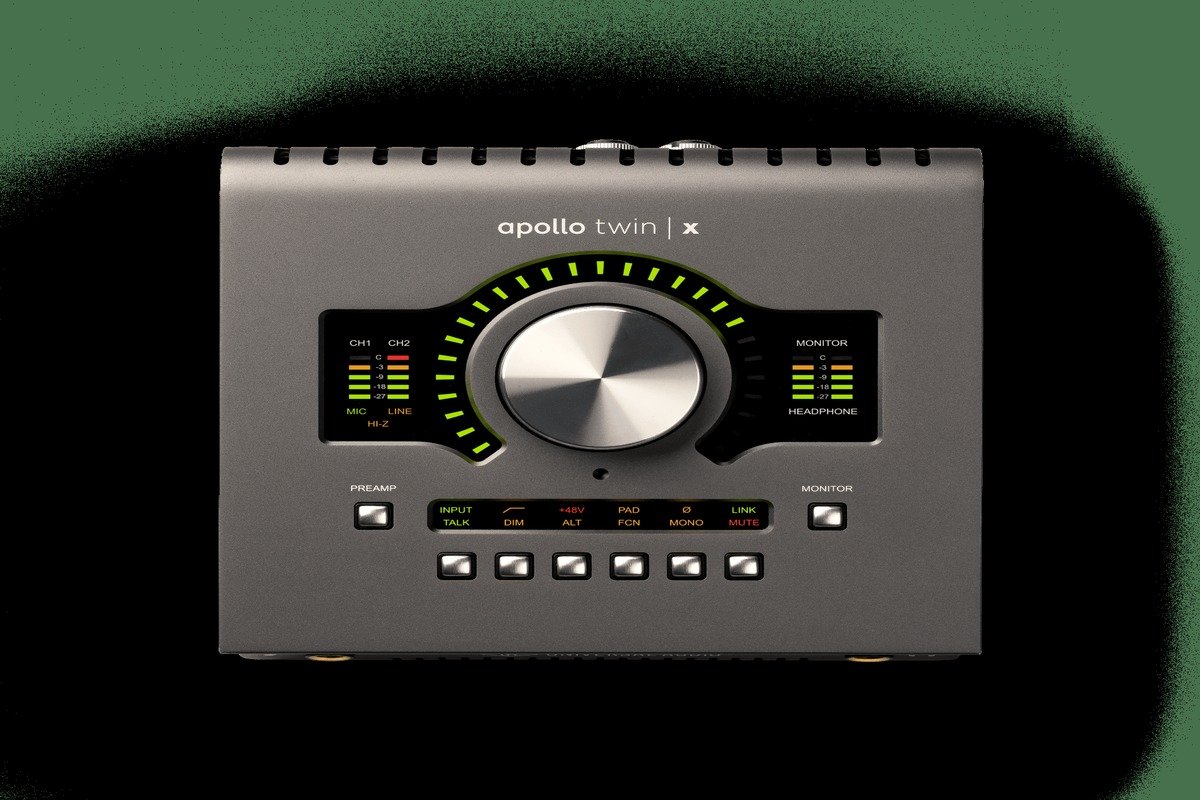
After countless YouTube videos, forum dives, and a particularly inspiring track I heard that credited some UAD gear, I decided it was time. I finally pulled the trigger on an Apollo Twin. It felt like a massive step for my little setup, and I remember the day it arrived like it was yesterday. The unboxing, the sleek design, the anticipation… it was an event.
Visit Official universal audio Website Now
What Exactly is Universal Audio Bringing to the Table?
Before we dive deeper into my experiences, let’s quickly touch on what Universal Audio is all about for those who might be new to the name.
At its core, Universal Audio has a rich history rooted in classic analog gear. The company was founded in 1958 by Bill Putnam Sr., a legendary engineer whose designs (like the 1176 compressor and the LA-2A Leveling Amplifier) are still considered industry standards. Today, his sons carry on the legacy, focusing on two main pillars:
1. **Audio Interfaces (Apollo Series)**: These are their flagship recording interfaces that incorporate powerful onboard DSP (Digital Signal Processing). This DSP allows you to run Universal Audio’s high-quality plugins in real-time, with near-zero latency, directly on the interface’s hardware. This is a massive deal for tracking.
2. **UAD Powered Plugins**: These are incredibly accurate emulations of classic analog studio equipment (compressors, EQs, reverbs, tape machines, preamps, etc.) and some modern, innovative tools. The magic is that they run on the DSP chips within their interfaces (or on dedicated UAD-2 DSP Accelerators), taking the processing load off your computer’s CPU.
3. **LUNA Recording System**: Their own Mac-based DAW (Digital Audio Workstation) that offers deep integration with Apollo interfaces, aiming to provide an “analog studio experience” in software.
4. **Microphones**: A more recent venture, including the incredible Sphere modeling microphones and traditional condensers.
5. **UAFX Pedals**: High-quality digital stompboxes that bring their famed plugin emulations to the guitar pedal format.
Essentially, Universal Audio wants to give you the sound and workflow of a high-end analog studio, but in a digital, software-driven environment.
My Journey into the UAD Ecosystem: A Workflow Revolution
When that Apollo Twin landed on my desk, I wasn’t just getting an audio interface; I was unlocking a whole new way of working.
The Apollo Experience: Real-time Magic
The first thing that blew me away was the concept of **real-time UAD processing**. Before, if I wanted to track vocals with a touch of compression or EQ, I’d have to use native plugins in my DAW, which inevitably introduced latency. This meant I was always tracking “dry” and adding effects later, or dealing with distracting delays in my headphones.
With the Apollo, I could load up a pristine emulation of a Neve preamp, an 1176 compressor, and a Pultec EQ right in the Apollo’s “Console” application – *before* the sound even hit my DAW. I’d track vocals and acoustic guitar with these legendary pieces of gear virtually strapped across the input, hearing the processed sound in real-time with virtually no latency. This wasn’t just a technical convenience; it was a psychological shift. It felt like I was working in a professional studio, committing to sounds as I recorded them, making more confident decisions. My performances improved because I was hearing a more “finished” sound.
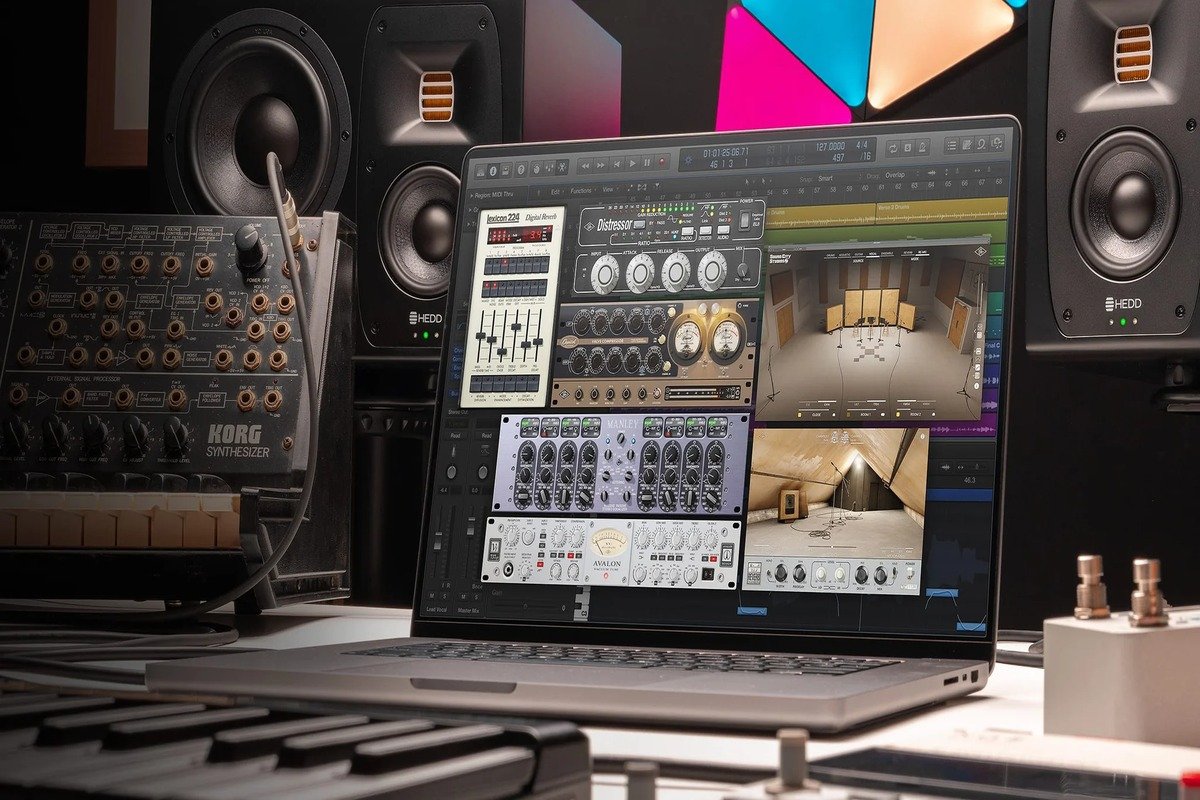
The preamps themselves in the Apollo are fantastic, clean and transparent, but the ability to use their Unison technology to emulate classic mic preamps (like Neve 1073 or API Vision) is simply astounding. It doesn’t just put a filter on the sound; it actually changes the impedance and gain staging of the physical preamp circuitry in the Apollo to match the modeled unit. The difference is palpable. Suddenly, my modest condenser mic sounded bigger, richer, and more characterful.
Diving Deep into the UAD Plugins: The Sound of Legends
This is where Universal Audio truly shines for me. The UAD Powered Plugins are not just good; they are *exquisite*. I’ve tried countless native plugins from various developers, and while many are excellent, there’s a certain depth, saturation, and musicality that the UAD emulations consistently deliver.
My mixing workflow completely changed. Where I once relied on generic digital EQs and compressors, I now had access to virtual versions of hardware that I could only dream of owning.
* **Compressors**: The 1176 Classic Limiter Collection (especially the Rev A “Blue Stripe”) and the Teletronix LA-2A Classic Leveler Collection became my go-to’s for vocals, bass, and drums. The way they grab and shape transients is incredibly musical, adding warmth and personality without sounding crushed. I remember the first time I put an LA-2A on a male vocal, and it just instantly sat perfectly in the mix, smooth and present, without me having to do much else. It was magic.
* **EQs**: The Pultec Passive EQ Collection (the EQP-1A is a marvel on bass and kicks, the MEQ-5 on mids for guitars) and the SSL 4000 E Series Channel Strip are staples. The Pultec’s ability to boost and cut the same frequency simultaneously for a unique curve is legendary, and Universal Audio nails it.
* **Reverbs and Delays**: This was another area where my mixes lacked. The EMT 140 Plate Reverb and the Lexicon 224 Digital Reverb gave my tracks an instant sense of space and professionalism. The Capitol Chambers, more recently, has become an absolute obsession – it’s just so lush and immersive.
* **Tape Emulation**: The Studer A800 Multichannel Tape Recorder and Ampex ATR-102 Mastering Tape Recorder plugins add that elusive analog warmth and saturation that makes everything feel cohesive and “expensive.” I often put the Studer across every track in my mix, dialing in subtle saturation and wow and flutter for that authentic tape vibe.
It’s not just about having these tools; it’s about *how* they sound. They impart a character, a weight, and a musicality that I struggled to achieve otherwise. They aren’t just processors; they feel like instruments themselves, each with its own personality.
“I used to spend ages trying to make my digital mixes sound warm and full,” one user told me. “The UAD plugins, especially the tape emulations and the classic compressors, just *do* it. It’s like flipping a switch.”
LUNA Recording System: A Different Approach
When Universal Audio introduced LUNA, their own DAW, I was intrigued. I’ve been a Pro Tools user for years, so switching DAWs isn’t something I take lightly. LUNA is a Mac-only system built specifically for deep integration with Apollo interfaces, and it aims to replicate the workflow of an analog console.
What I love about LUNA is its seamless integration with the Apollo Console. You don’t manage two separate applications; they feel like one. Features like “Accelerated Realtime Monitoring” mean you’re always tracking with near-zero latency, even with stacks of UAD plugins. The built-in “Tape Emulation” on every track and the “Summing” extensions (like Neve Summing or API Summing) add genuine analog flavor right into the mixer, without having to insert individual plugins.
It’s a different paradigm. It encourages commitment, much like a real analog studio. While I haven’t fully transitioned all my projects to LUNA, it’s become my go-to for tracking and for projects where I want that true “analog console” feel. It’s still evolving, but the potential is enormous, and the sound quality is top-notch.
“LUNA really changed how I think about recording,” shared a fellow producer. “The built-in tape and summing are incredible, and the workflow feels so much more intuitive than jumping between Console and my DAW.”
Expanding Horizons: Mics and Pedals
Universal Audio hasn’t stopped at interfaces and plugins. Their venture into microphones and guitar pedals has also caught my attention.
The **Sphere L22 Modeling Microphone** is an absolute marvel. It’s a dual-capsule condenser mic that, when paired with the UAD software, can accurately emulate dozens of legendary microphones – from classic Neumanns to sought-after ribbons. I got to try one at a friend’s studio, and the ability to change mic models *after* recording, or even blend two different models, is mind-boggling. It’s like having an entire locker of vintage mics at your fingertips. For someone like me who can’t afford a U67 or C12, the Sphere is a dream come true, giving access to those iconic sounds.
Their more traditional condenser mics, like the SC-1, also offer fantastic performance, leveraging UAD’s DSP for processing right at the source.
Then there are the **UAFX Pedals**. I’m a guitar player, and when I saw Universal Audio entering the stompbox market, my ears perked up. Their Del-Verb, Starlight, and Golden Reverberator pedals are essentially their world-class plugin emulations brought into a robust, stage-ready pedal format. The sound quality is exceptional – rich, three-dimensional, and genuinely inspiring. They’re not cheap, but they offer studio-grade effects that you can take to a gig or use with your amplifier.
Visit Official universal audio Website Now
Why Universal Audio Still Stands Out for Me
After years of using Universal Audio gear, several aspects consistently impress me and reinforce why I consider it a cornerstone of my studio.
Unparalleled Sound Quality
This is the non-negotiable. The sound of Universal Audio plugins is simply outstanding. They capture the nuances of the original hardware in a way that few other plugin developers achieve. There’s a depth, a richness, and a musicality that translates directly into better-sounding mixes. Whether it’s the subtle harmonic distortion of an emulated tube preamp or the gooey compression of an LA-2A, the fidelity is consistently high.
The Power of Real-time Processing
As mentioned, tracking with UAD plugins at near-zero latency is a workflow enhancer like no other. It removes a significant barrier in the creative process. You hear what you’re getting, which leads to better performances and more confident mixing decisions down the line. It’s truly a game-changer for vocalists and instrumentalists.
Robust Build Quality and Reliability
My Apollo Twin has been a workhorse. It’s built like a tank, the knobs feel solid, and it’s never given me a single issue. In the heat of a recording session, reliability is everything, and Universal Audio delivers. Their software is also incredibly stable, which is crucial when you’re on a deadline.
“My Apollo has been rock-solid for years,” one user commented. “It’s the most dependable piece of gear in my studio, and the software updates keep it feeling fresh.”
A Cohesive Ecosystem
What I truly appreciate is how everything works together. The Apollo interfaces, UAD plugins, and LUNA recording system form a tight-knit ecosystem. This synergy means fewer compatibility issues, a streamlined workflow, and a consistent sound philosophy across all your tools. It feels like a complete studio solution, not just a collection of disparate parts.
Legacy Meets Innovation
Universal Audio doesn’t just rest on the laurels of its past. While they meticulously emulate classic gear, they also push boundaries with things like Unison technology, Sphere microphones, and the LUNA platform. They strike a brilliant balance between preserving history and innovating for the future of audio production.
Is Universal Audio Right for You? Considerations and Who Benefits Most
While I’m clearly a huge fan, Universal Audio isn’t necessarily for everyone, and there are some things to consider.
The Investment
Let’s address the elephant in the room: Universal Audio gear, particularly the interfaces and many of the premium plugins, can be a significant investment. You’re not just buying an interface; you’re buying into an ecosystem that comes with a price tag. However, what you’re getting is top-tier professional audio quality and a workflow that can genuinely elevate your craft. For me, the return on investment in terms of improved sound and workflow has been immense.
“Yeah, it’s not cheap, but the sound quality and the sheer workflow improvement justify every penny,” said another long-time UAD user. “It’s like buying a high-end instrument; it pays off in the quality of your work.”
DSP Management
While the UAD DSP chips are powerful, plugins do consume resources. You’ll need to be mindful of how many instances of demanding plugins (like some of the complex reverbs or tape machines) you’re running, especially on smaller Apollo models. That said, even a single DSP chip on an Apollo Twin can handle a surprising amount of processing for tracking and mixing a typical project. For larger projects, you might consider an Apollo with more DSP or a UAD-2 Satellite.
Learning Curve
While the core functionality is straightforward, getting the most out of the UAD ecosystem – understanding the Console app, Unison technology, and LUNA’s unique features – does require a bit of learning. However, Universal Audio provides excellent documentation and a thriving online community, so help is always at hand.
Who Benefits Most?
* **Home Studio Owners Seeking Pro Sound**: If you’re serious about getting professional-quality recordings and mixes in your home studio, an Apollo interface with its UAD plugins is an incredible upgrade.
* **Professional Engineers and Producers**: Many top studios rely on Universal Audio for their analog emulations and robust interfaces. It’s a professional standard.
* **Musicians and Songwriters**: If you record your own demos or finished tracks, the ability to track with premium effects and get a polished sound from the start is invaluable.
* **Guitarists and Bassists**: The UAFX pedals offer incredible effects, and the Unison preamps are fantastic for direct recording.
My Final Thoughts on Universal Audio
Reflecting on my journey with Universal Audio, it’s clear that they’ve been instrumental in helping me achieve the sound I’ve always dreamed of. It’s more than just gear; it’s a philosophy that empowers creators to make better-sounding music with a more inspiring workflow.
From the transformative real-time processing of the Apollo interfaces to the rich, authentic character of the UAD plugins, and the innovative approach of LUNA, every aspect of the Universal Audio ecosystem is designed with quality and the user experience in mind. Their expansion into microphones and pedals further cements their commitment to providing top-tier tools for every stage of the audio production process.
If you’re on the fence, or if you’re looking to take your audio production to the next level, I genuinely recommend exploring what Universal Audio has to offer. It transformed my studio, and I believe it can do the same for yours. It’s an investment, yes, but it’s an investment in sound quality, workflow efficiency, and ultimately, in your creative output.
Visit Official universal audio Website Now to explore their full range of interfaces, plugins, microphones, and pedals. Dive in and discover the difference for yourself!
Author

admin@666.com
Related Posts

Unlocking Affordable UK Adventures: My Full Review of FlixBus Travel
Unlocking Affordable UK Adventures: My Full Review of FlixBus Travel Hey everyone! If you’re anything like me, you love exploring new places,...
Read out all
Unlocking My Perfect Cup: A Deep Dive into My Trade Coffee Journey
My Coffee Revelation: Why I Fell Head Over Heels for Trade Coffee Let’s be real, for a lot of us, coffee isn’t...
Read out all
Unlocking Radiant Skin: My Deep Dive into the World of Dermalogica Skincare
Unlocking Radiant Skin: My Deep Dive into the World of Dermalogica Skincare Let’s talk skin, shall we? Because if you’re anything like...
Read out all
My Deep Dive into ezcontacts: Saving Sight and Cents Online
My Deep Dive into ezcontacts: Saving Sight and Cents Online Let’s face it, seeing clearly is non-negotiable, but the cost of getting...
Read out all
My Go-To Underwear: A Deep Dive into Hanes Comfort and Lasting Value
My Go-To Underwear: A Deep Dive into Hanes Comfort and Lasting Value There are some things in life that just become staples....
Read out all
My Go-To for Game Day Glory: A Deep Dive into the NFL Shop Experience
My Go-To for Game Day Glory: A Deep Dive into the NFL Shop Experience Alright, fellow football fanatics, let’s talk about something...
Read out all